

What the CES 2026 conference program tells speakers about new tracks and specific titles
The CES 2026 conference program listed more than 400 sessions and more than 1,300 speakers. Its new tracks and the way its sessions are titled show where a newcomer finds room on a stage that large.
A program with room for new voices
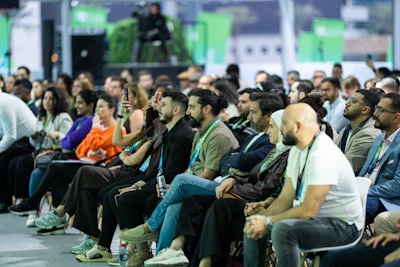
CES ran in Las Vegas from January 6 to 9, 2026, with media days on January 4 and 5. In its press release of January 2, 2026, the Consumer Technology Association (CTA) put the conference program at more than 400 sessions with more than 1,300 speakers. The release also named three new conference tracks: Manufacturing, Wearables and a Women's Health Summit.
For you as a speaker the new tracks are worth more attention than the keynote list. The keynotes went to chief executives such as AMD's Lisa Su, Siemens' Roland Busch and Caterpillar's Joe Creed. A track that has just been created has no established roster of regulars, so its organizers need sessions that nobody has given before. The Wearables track ran on January 8 with three sessions starting at 9, 10 and 11 a.m.: AI-Powered Wearables, Smart Apparel and Body-Based Tech. Three slots in one room on one day make a small program. Each speaker in it has a large share of the audience's attention.
Titles that name a subject and a stake
The session titles of the program are concrete. The Women's Health Summit on January 6 opened with "Closing Gaps to Unlock $100B Market" from BCG, followed by "Designing Health Tech for Women" from K'ept Health and "The GLP-1 Effect" from PwC. The Great Minds series on January 8 included "The New Blueprint: Spatial Computing Meets Home Improvement" with Lowe's. A title like that tells the attendee which technology is involved and which industry it serves.
Several of these sessions list a company or a research firm next to the topic. You need no large name beside yours to learn from that. The organizers had a subject and an audience for each slot before they listed a speaker. A pitch that arrives with both is easier to place in such a plan.
Formats beyond the panel
One event can run many stages. The Creator Stage in the Central Hall was open to all attendees and hosted sessions on the creator economy. The Foundry at the Fontainebleau ran on January 7 and 8 with sessions such as "Real Returns on AI". An Innovation Policy Summit hosted fireside chats with the chairs of the FTC and the FCC. Each of these stages has its own audience, its own tone and its own type of speaker.
A consultant with measured results from a client project fits a session called "Real Returns on AI" better than a general AI keynote. A founder in a niche of health technology fits a summit on a single health topic. When you decide where to submit, pick the stage whose audience already asks your question.
What to do with this
Look for tracks that a conference introduced this year, because a new track has no regular speakers yet. Write your abstract with a title that names the technology and the industry or problem it affects. Add one result from your own work that supports the title.
Start with a list of three conferences in your field and note which tracks each one added or renamed lately. Our guide on how to find a call for speakers shows where such announcements usually appear.
Sources: What Not To Miss at CES 2026, Consumer Technology Association, January 2, 2026.

Marin Niehues is a management consultant and international speaker. With Niehues Consulting he works with organisations from scale-ups to DAX 40 corporations, and on stage he has spoken at more than 45 conferences in 23 countries.
All articles by Marin Niehues