


Speaker system: from a one-off appearance to an ongoing conference program
A speaker system emerges when you build up five assets that grow over the years and make every new submission easier. The speaker without a system writes a new abstract for every call for papers, builds a new talk each time and waits for invitations in between. The speaker with a system has been working from the same topic for years, with a stock of ready-to-submit abstracts and a session that has settled after its third outing. Both invest a similar number of hours, and only for one of them does every hour pay into the next.
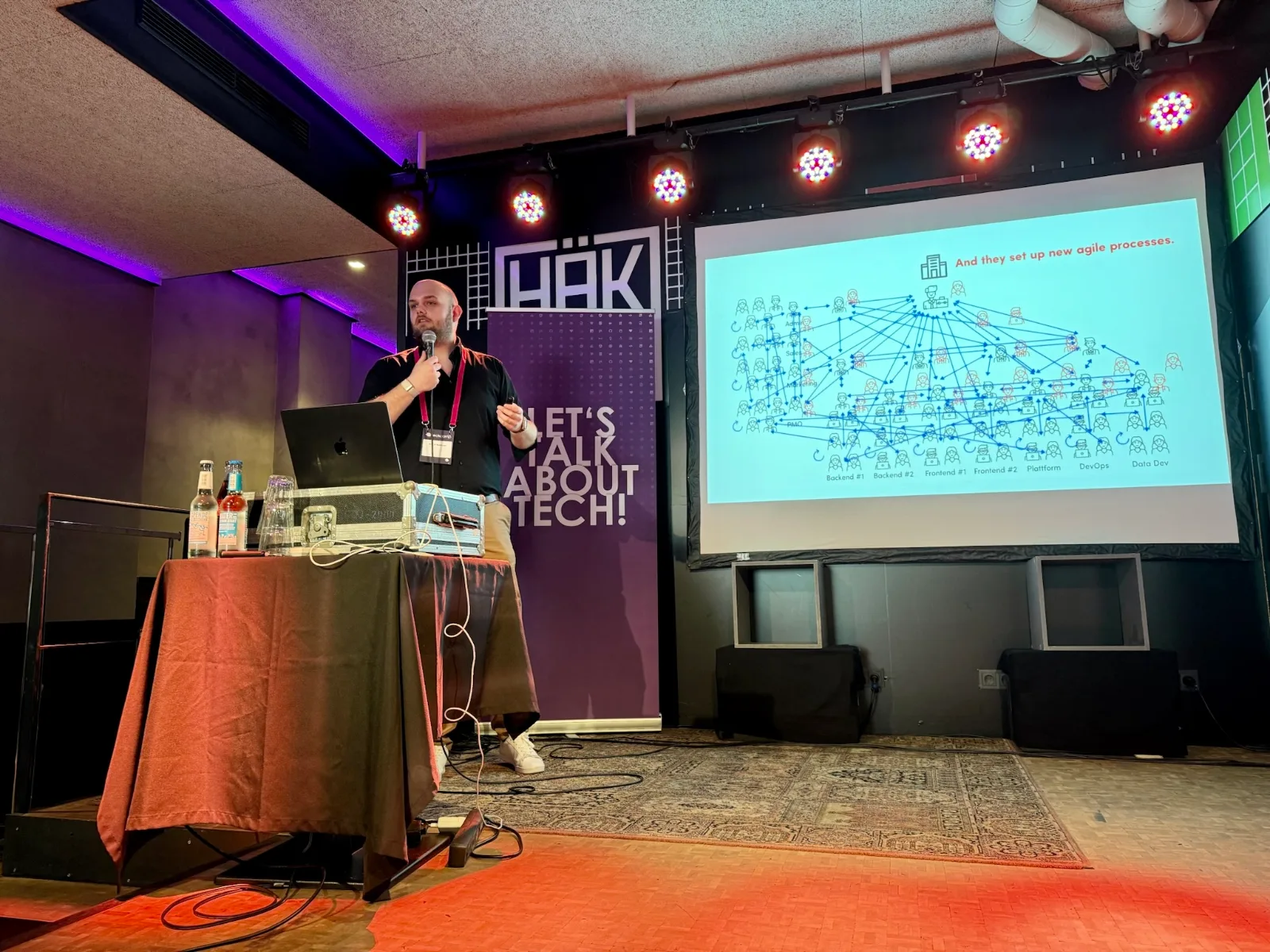
A speaker system emerges when you build up five assets that grow over the years and make every new submission easier. The speaker without a system writes a new abstract for every call for papers, builds a new talk each time and waits for invitations in between. The speaker with a system has been working from the same topic for years, with a stock of ready-to-submit abstracts and a session that has settled after its third outing. Both invest a similar number of hours, and only for one of them does every hour pay into the next.
The five assets of a speaker system are:
- a topic that grows sharper across many submissions,
- a stock of abstracts, that is, short talk proposals with which you apply to a conference,
- a session that has been rehearsed by giving it several times,
- material from past appearances that flows back into your sales conversations,
- a calendar that is ahead of the conferences' submission deadlines.
How can I tell that I start from scratch every time?
You start from scratch every time if a call for papers comes in and you have nothing to hand that fits it. A call for papers is the public invitation with which a conference collects talk proposals. You sit down and write an abstract from scratch, because the conference is cut differently in terms of topic from the last one you submitted to. That costs you several evenings, and when the rejection arrives, all the work was tied to this one call.
The second sign is a talk that vanishes into a drawer after the appearance. You put weeks into a session, gave it once, and after that nothing more happened with it until the same cycle began with the next topic. The third sign concerns the calendar: you hear about an interesting conference and, when you look it up, find that the submission deadline passed six weeks ago.
A topic that grows sharper across submissions
The most important asset is the topic itself. If you work on the same topic over the years, every submission and every question from the audience gives you feedback on which framing holds up. After twenty submissions you know which wording a committee responds to, which hook ends up in the program and at which point your audience nods of its own accord. These insights only accumulate if the topic stays stable.
If, on the other hand, you change fields every year, you collect isolated experiences without any connection between them.
What stays stable is the core, while the packaging changes: the same problem for a different audience, the same mechanism explained through a current occasion, the same experience translated for a different industry. How a recognizable profile forms from this over the years is traced in the article on personal branding as a speaker.
How many abstracts should I keep in stock?
Four finished abstracts are the working size many speakers start with, because they cover the common types of conference. Instead of writing a new abstract for every call, you keep several submissions ready that cover different parts of your positioning, and for each call you choose the one that fits.
The order in which this stock grows is determined by the cost of the individual pieces. It starts with the strongest session you already have. A variant of it for a different audience costs little after that, because the thinking has been done and only the framing changes. What becomes expensive is the adjacent topic, which gives you a second anchor and increases the number of conferences you can submit to at all. What matters is the gap between abstract and talk. An abstract runs to a few hundred words, and the fully worked-out talk is only created after acceptance. What a committee looks for in such a submission is explained in the article What is a call for papers?.
Why a session only settles after the third outing
The first time, your session is a rough draft, however thoroughly you have prepared it. Only a full room shows which example lands, where it gets too long and at which point a transition snags. From the first appearance you come back with a list that you work through for the second, and by the third time you are inside the session instead of performing it. Since Paul Fitts and Michael Posner, the psychology of learning has described this path in three phases: at first every step demands conscious attention, then the sequences are refined, and finally they run so independently that your mind is free for the room.
This gain disappears as soon as every appearance gets a new topic. The speaker with five different talks in five appearances has delivered a rough draft five times, while the one who gives the same session five times gets a settled session for the same time invested.
The danger at the other end is autopilot. After the twentieth time you know every move so well that the session runs cleanly and yet something is missing that an attentive room notices in the first few minutes, namely the energy of someone for whom something is at stake that morning. Expertise research around Anders Ericsson therefore distinguishes mere repetition from deliberate practice that targets individual weaknesses. What helps is changing small details between appearances and reminding yourself that the people in front of you are hearing the session for the first time.
Material that works several times over
Every appearance leaves substance that lasts beyond the day: a recording, photos from the stage, the conference name on your profile and the questions from the audience. The recording works hardest. It is the proof for anyone who wants to see how you think about a problem before hiring you, and it is ready for use in every ongoing sales process without you having to produce it again.
The questions from the room are the second return. They show you where in your topic your buyers are really stuck, and they provide the words they use to describe their problem themselves. Both end up in the next intro call and sharpen your offer. The speaker without a system leaves this substance lying around: the recording stays unlinked, the photos stay on the phone, and the questions are forgotten after two weeks. How a talk you have given turns into posts for LinkedIn and your blog is shown in the article How do I turn a conference talk into content?.
How do I keep track of deadlines and submissions?
You keep track of deadlines and submissions by recording the interesting conferences of the coming year and their usual deadlines in advance and planning each submission like a client appointment. Conferences work with fixed submission windows that are open for three to twelve weeks and, depending on the type of conference, close between seven weeks and nine months before the event. If you only react to a call when you happen to come across it, you regularly miss a large share of the deadlines that would suit you. The calendar of call for papers deadlines shows when most calls are open.
At first a spreadsheet is enough, with the conference, the deadline, the abstract submitted, the status, the expected decision date and the follow-up date for each submission. As the number grows, keeping it up becomes work in itself, because a serious program quickly involves dozens of submissions a month, each with its own form and its own deadline.
Stage Starter takes this work off your hands: we find the right calls, write the submission and submit it. We keep the deadline calendar and the overview of all submissions, follow up with the organizers and support you all the way to the stage, while you contribute your expertise and give the go-ahead. The guide to speaker agencies describes what an agency does and what it costs.
The second part of the calendar concerns repeat invitations. A good appearance for an organizer that runs several formats often leads to a second request, because an organizer prefers to book someone whose work they know.
What a system can withstand
The practical difference shows in a bad year. If a quarter is lost because a project escalates or a conference is canceled, the speaker without assets loses touch and afterwards starts again from the first submission. If you have assets, you take your stock out of the drawer after the break, send out two abstracts and speak again as soon as a date comes together, with a session you could give in your sleep.
Frequently asked questions
How long does it take for such a system to be in place?
For most people, the assets fill up over one to one and a half years. The effort is spread unevenly: the first abstract costs the most, while a variant for a different audience hardly takes any time, because the thinking has already been done. Progress becomes visible in the conversations after appearances, which turn into meetings more often because the same session now hits home with its audience.
May I give the same talk several times?
Yes, that is the norm. Your session gets better with every repetition, while the audience is different each time. There are two hard limits: the same conference will not take the same session two years in a row, and some calls explicitly require a talk that has not been given before.
May I submit the same abstract to several conferences at once?
Yes, submitting the same abstract to several specialist conferences at once is common practice, unlike with academic journals. Exceptions are stated in the call itself, for example when a conference requires a premiere or exclusivity in its region. If two conferences accept you for the same date, you promptly and politely withdraw from one of them.
How do I manage my submissions?
To begin with, a spreadsheet is enough, with one row per submission and columns for conference, deadline, abstract, status, decision date and follow-up date. A CRM or a project tool becomes worthwhile as soon as you have more than a handful of submissions open at once. With an agency, the team keeps this overview and only reports acceptances and pending approvals to you.
How many appearances a year do I need for a system?
In our experience, four to six appearances a year cover the share of your client acquisition that the stage takes on, and one to three are realistic in the first year. A system pays off from the second appearance, because each further one builds on the same assets.
What do I do if a session keeps being rejected?
First you rework the title, because it is the cheapest lever. If success still fails to come over many submissions, the problem usually lies deeper, in the perspective itself. Then the question arises whether this session has a viable market or whether its strength lies in a different framing.
Do I need a system if I only want to speak twice a year?
Yes, especially then, because with two appearances a year the effort per appearance is at its highest if you start from scratch each time. With a stable topic and a few finished abstracts, these two dates cost you a fraction of the time.
If you want to know what an ongoing conference program would look like for your topic and which stages could be part of it, talk to us in an initial consultation. We look together at your field, your clients and the conferences where they sit.

Marin Niehues is a management consultant and international speaker. With Niehues Consulting he works with organisations from scale-ups to DAX 40 corporations, and on stage he has spoken at more than 45 conferences in 23 countries.
All articles by Marin Niehues