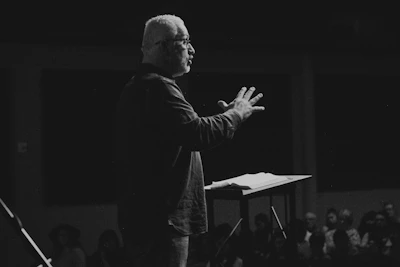


Who sits in the audience at an industry conference, and how do they listen?
The audience at an industry conference consists of decision-makers, professional peers and mixed attendees who have come for five different reasons and listen accordingly. One is looking for an answer to a decision due in three weeks, the next is there at company expense because professional development is part of her objectives, and a third mainly wants to meet people during the coffee break. These reasons decide how you are listened to, and they explain why a well-built talk can still run into a silent room. Anyone using the stage as a channel for winning clients therefore needs to know the audience at industry conferences about as well as their own topic.
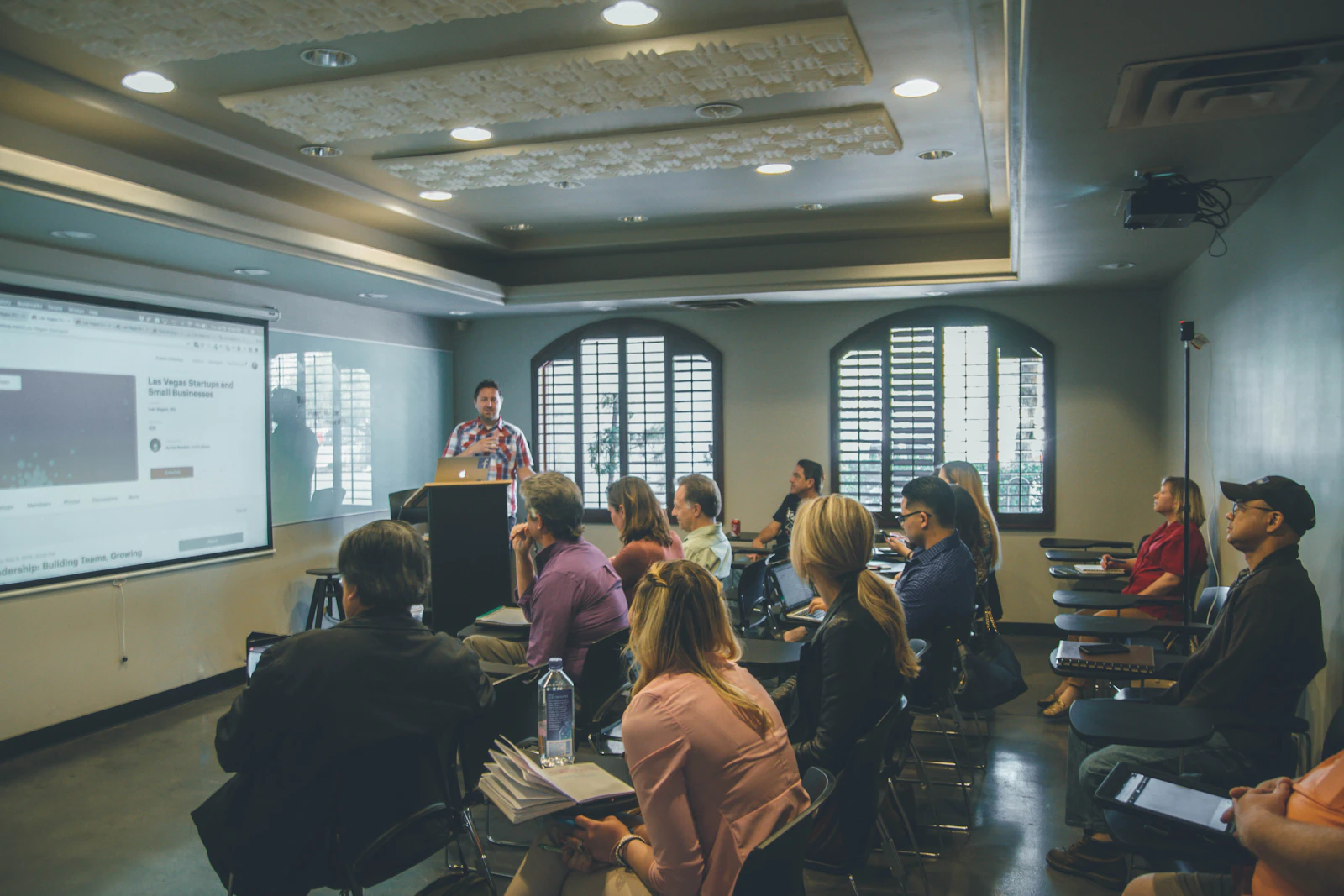
The audience at an industry conference consists of decision-makers, professional peers and mixed attendees who have come for five different reasons and listen accordingly. One is looking for an answer to a decision due in three weeks, the next is there at company expense because professional development is part of her objectives, and a third mainly wants to meet people during the coffee break. These reasons decide how you are listened to, and they explain why a well-built talk can still run into a silent room. Anyone using the stage as a channel for winning clients therefore needs to know the audience at industry conferences about as well as their own topic.
Why do people attend industry conferences?
People attend industry conferences above all to learn, and alongside that to maintain contacts, break their routine, represent their company or take part in professional development. Each motive brings its own attitude into the room:
- Professional benefit: someone has a problem, finds a session on it in the program and hopes to see more clearly afterwards. This part of the room is the largest, but never the whole of it, and its expectations match what the program entry says.
- Network: a considerable share travels to a conference to meet people, and for this group the sessions are the structure between the conversations.
- Change of scene: two days away from their own office lower the willingness to work through dense slides.
- Obligation: someone represents their company, staffs a stand on the side or accompanies a client.
- Professional development: the ticket came from a training budget, and someone else decided that this conference makes sense.
A survey of convention attendees in tourism research likewise arrived at five bundles of motives, among them networking and education.
Anyone who paid and decided for themselves listens with more motivation and scrutinizes more critically. Where tickets are paid from company budgets, prior knowledge is more widely spread and baseline attention lower. Which type of event lies ahead of you is often already shown by the kind of conference and its ticket price.
Which roles sit in the audience at an industry conference?
The audience contains decision-makers with budget, professional peers from your field and a mixed audience brought together by the topic. Stage Starter sorts an audience by function and career stage, because this classification prepares a decision you make long before the appearance: which role in the room is the direct buyer for your offer, which acts as a multiplier, and which simply remains audience for you. The same conference is therefore of very different value to two consultants. Who in a company has a say in a purchase is described in the article on the buying center in B2B.
A decision-maker sits in the room with budget or strategic authority and comes with a decision that is on their agenda anyway. They want to make it more clearly afterwards, their time is short, and how economically a talk treats it is read as a signal of whether the speaker understands who they are talking to. For classic B2B consulting this is the direct buyer in the room, and preparing for this audience is the most demanding of all.
Peers are people who do the same thing as you. They know the field, have formed opinions and notice immediately when a session mainly summarizes what the community has long known. As buyers of consulting services they usually drop out, because they solve their problems themselves. They become some of the most valuable people in the room as multipliers, because they make recommendations in their companies and a good appearance in front of peers leads to invitations onto commercial stages.
The mixed audience comes together over your topic rather than a shared function. It is regarded as a weak stage, because hardly anyone matches your buyer profile exactly. Yet decision-makers sit there who never turn up at narrow specialist stages because those are too granular for them, and you would hardly reach them otherwise.
How does attention change over the conference day?
Attention is high in the morning once everyone is seated, drops to its lowest after lunch and is shaped by fatigue in the late afternoon. The first slot in the morning meets a room that is still arriving: people are looking for seats, fetching coffee and are partly still on their journey in their heads. In return, receptiveness is high once they are seated, and the audience has not yet overwritten the day with content.
The slot directly after lunch is the hardest of the day. Sleep research describes this post-lunch dip as part of the human daily rhythm, and it is more pronounced after a high-carbohydrate meal. The natural afternoon dip meets a full stomach, the morning sits in the head as a pile of unprocessed impressions, and the first attendees are now answering their emails. Passive listening with half attention is normal here and not a verdict on the session. Later in the day fatigue sets in, but the room is socially warmed up.
Why does a room not react even though the talk is good?
A room often does not react because the largest group listens attentively and neutrally, with a facial expression many speakers take for boredom. The actively positive nod and lean forward, laugh at the moments meant to land, and are usually a minority. The neutral ones concentrate without visible reaction, with the flat expression most people have when they listen. Anyone who takes this expression for lack of interest throws themselves off, even though the room is completely with them.
Then there are the passive ones, who drift off now and then and come back in, and the distracted, whose attention is elsewhere for reasons outside the room. Real boredom looks different from both, with a glassy stare and a slumping posture. If such faces accumulate at a particular point in your session, you have information about that point.
What phones, empty rows and heckling mean
A single phone in the third row almost always has a reason outside the room: a meeting is starting, a flight has been moved, something urgent has come in from the office. The exception is the moment when distraction spreads across a whole section of the room at once. Then the content has lost people, at a specific point you can remember.
Empty rows almost always say something about the program and rarely something about you: parallel tracks, a well-known name in the room next door, an awkward time slot or a title nobody understood in the program booklet. People leaving during a session is normal, and the first time it still hits harder than you expect.
Heckling and long contributions without a question occur where the audience is senior enough to feel entitled. More often than an attack on your content, the motive is a wish for their own visibility. Reacting visibly rewards the behavior and draws the rest of the room's attention to it in the first place. How to handle questions and objections at the end is described in the article on the Q&A.
The three mistakes a room punishes
A lot is forgiven: nerves, a slip of the tongue, a technical glitch or an example that falls flat. In this respect an audience is considerably more forgiving than your own expectations of yourself, but there are three things it does not forgive.
The first is the disguised sales pitch. As soon as a session tips into product advertising or swings round to your own offer at the end, the impression arises that it was never about the audience's problem. The second is invented evidence, because a convenient case study or an embellished figure is quickly exposed in front of an experienced room, and the damage is greater than any benefit the smoother story would have brought. The third is disrespect for the time in the room: running over, rushing, cramming the material of three sessions into one.
What the audience expects in return is manageable. It wants what the program entry promised, to see why you of all people are speaking on this topic, and to leave with something it can work with the next day. Anyone who knows the course of a conference day from the speaker's perspective quickly sees how little time remains for this.
When you choose your audience
You choose your audience months before the appearance, with the conference and the track you submit to. Who actually comes, how full it gets and whether a well-known name is speaking next door is something you cannot see beforehand. You still have to commit early, because title, abstract and structure are written long before and already address a particular role in the room. Many consultants choose their topic and then look for stages for it, instead of first clarifying which role in the audience buys their offer and at which conferences that role sits. What the whole path from topic to stage looks like is described in the guide Becoming a speaker.
This is exactly the work Stage Starter takes on for you: we find the conferences and calls where your buyers sit in the room, write the submission and submit it. The engagement starts from $999 net per month.
Frequently asked questions
How can I tell during the talk whether my audience is with me?
You can tell from posture and gaze. Anyone leaning forward, nodding or taking notes gives you a reliable signal, and leaning back while phones appear is just as reliable, only in the other direction. Individual reactions say little, patterns across larger parts of the room say a lot.
How do I analyze a conference audience before my talk?
You analyze a conference audience through the organizer's information and the previous year's program. Many organizers publish an attendee profile for sponsors with industries, functions and seniority levels, and on request they will tell you the expected number in the room and the functions of registered attendees. The track description and the previous year's sessions show the level at which the audience listens.
How do I get the audience to participate?
The audience participates when taking part is easy and starts from its own problem. A show of hands in the first minutes, a short live poll via phone or an example on which the room gives its assessment work even in large rooms. Open questions to a silent room rarely work, because nobody wants to speak first.
How many people in the room are potential clients at all?
In most rooms, a minority. A sensible calculation divides the audience into a large group with no connection to your offer, a medium-sized group of possible multipliers and a small group of direct buyers. For winning clients it is the density of the last two groups that counts, while the sheer size of the room says little.
Is a small audience a waste of time?
Rarely. Thirty listeners from the right segment are worth more than three hundred from the wrong one, and small rooms allow considerably more conversations afterwards. Every appearance you give is evidence that strengthens the next submission.
What does it mean if the audience does not react?
Usually it means the room is listening with concentration. The neutral expression is normal when people listen, and the warning sign is only distraction spreading across a whole section of the room at once.
In front of the right audience with Stage Starter
In front of which audience your offer triggers the most conversations and at which conferences that audience sits is something we can work out in an initial consultation.

Marin Niehues is a management consultant and international speaker. With Niehues Consulting he works with organisations from scale-ups to DAX 40 corporations, and on stage he has spoken at more than 45 conferences in 23 countries.
All articles by Marin Niehues