


Speaker Reel: What Program Committees Want to See and How to Record One
A speaker video, meaning a clip of up to three minutes or a reel with excerpts from several appearances, shows a program committee how you speak and how your audience responds. One call can ask for a video in its form, while another lets the committee request one if it needs it. The requirements we checked range from three minutes at most in a submission form to two to five minutes for a reel. On a small budget the recording works when the sound is clear, the opening grabs attention and the length matches the call.
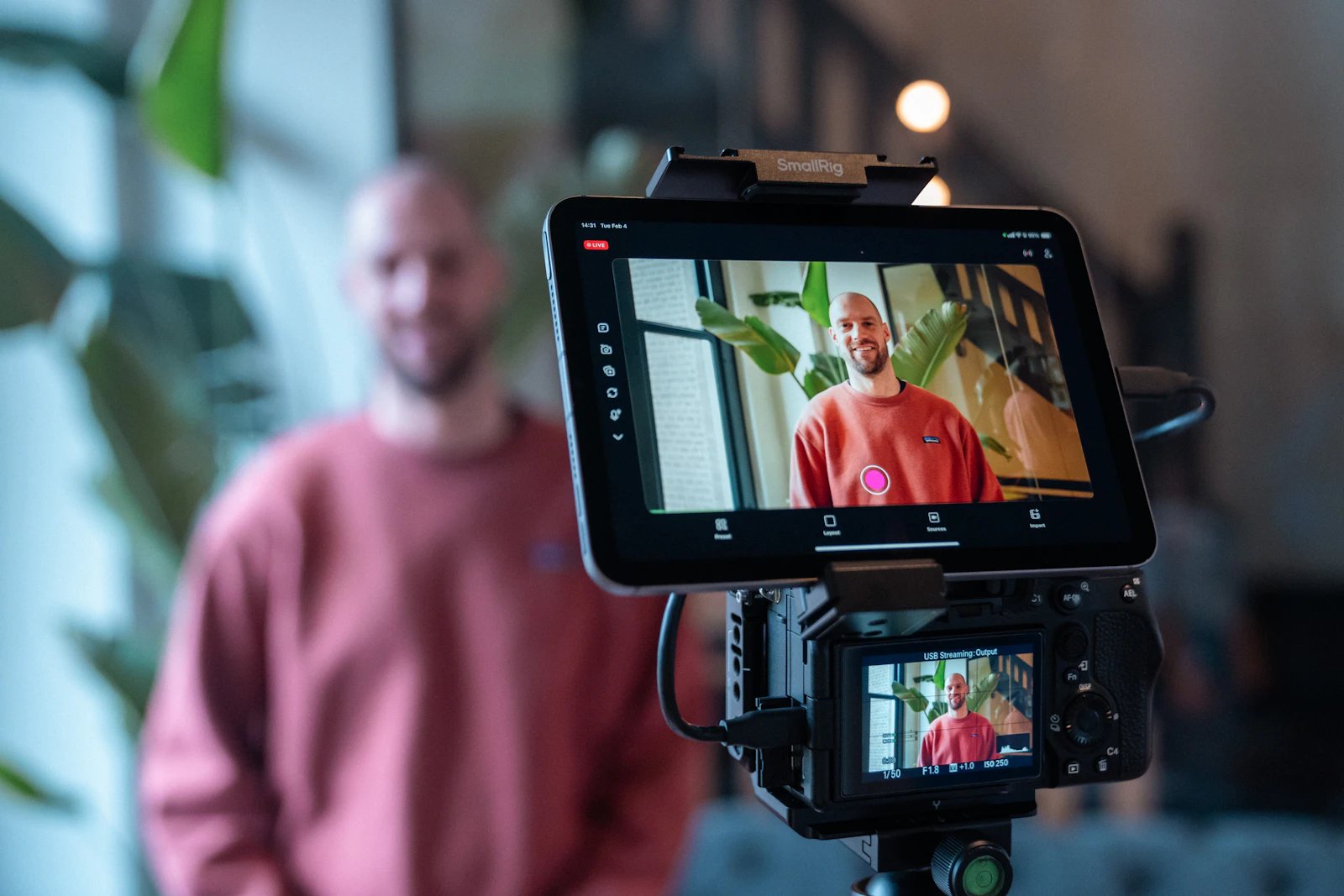
A speaker video, meaning a clip of up to three minutes or a reel with excerpts from several appearances, shows a program committee how you speak and how your audience responds. One call can ask for a video in its form, while another lets the committee request one if it needs it. The requirements we checked range from three minutes at most in a submission form to two to five minutes for a reel. On a small budget the recording works when the sound is clear, the opening grabs attention and the length matches the call.
What a program committee wants to see in a speaker video
A committee sorts submissions by fit first and then looks at the person, as our article What a program committee looks for in an abstract describes. The video answers the question about the person with picture and sound, while the abstract can answer it only in text.
A U.S. real estate association states in its 2026 call for speakers that every submission includes a short speaker clip that demonstrates presentation skills. The clip must not be full length and may run three minutes at most. Among the association's four evaluation criteria are presentation style, with teaching approach and audience interaction. Those points can be checked on a clip.
A U.S. association for fraud examiners handles it differently. Its call for speakers says that its selection committee may request a short video during review in which you outline your proposal and intended presentation in more detail. A video, it adds, can greatly enhance your chances of being selected. The page names no length. At the first organizer the video is evidence of how you perform. At the second it is an explanation of the proposal.
Other organizers may handle it yet another way. Check every call for whether a video is required, in which field it goes and what length applies.
How organizers who invite a speaker judge a reel is shown by the checklist from keynote speaker Jeff Bloomfield dated October 15, 2026. It lists eight criteria. They include whether the rooms match your audience, whether a long unedited segment is included, whether real reactions in the room are visible, whether you can say in one sentence what you teach and whether you earn attention without a long intro. The text comes from a speaker who uses it to promote his own appearances. It concerns booking keynotes and does not cover selection in a call. The criteria still work as a checklist for your own video. That adaptation is ours.
If you submit in English without being a native speaker, the video also shows your language level. Sven Peters names this purpose in his article on conference submissions. He recommends a video of two to five minutes in which you present. According to Peters it does not have to be high quality, but you should come across loud and clear.
Submission clip and reel compared
The two videos have different viewers and therefore different forms. The submission clip goes with your proposal to a committee that reads several proposals in the same track side by side. The reel sits on your website for organizers who do not know you yet.
Both videos can come from the same material. From a recorded talk you cut the submission clip as one piece. For the reel you take one excerpt each from several appearances. Our article Turning a conference talk into content shows how to reuse a recording.
Length and editing: short, with a strong opening
Recommendations for reels differ. All of them give a range instead of a fixed number. In a post on Speaking For A Living dated February 25, 2026, Rene Godefroy recommends two to four minutes for most keynote speakers. As the post itself says, that target is a practical guideline and not an industry requirement. Bloomfield gives two to five minutes as the norm among organizers. For the clip in a call, whatever the call specifies applies. In the Women's Council example that is three minutes at most.
For the structure we follow Godefroy. The reel opens with a moment that makes people keep watching. Godefroy advises against opening with a logo animation or a list of credentials. In between come three to five excerpts that show different sides of you, such as a core message, a story, a moment with the audience, a practical lesson and a closing statement. At the end your name and website appear. On sound, Godefroy advises reducing background noise, balancing the volume between excerpts and avoiding music that competes with your words. According to Godefroy, clear communication matters more than elaborate transitions.
From this we derive three rules for editing. The submission clip stays one continuous segment, because it should show your style and how you work with the audience. Cuts hide both. Your name and topic appear as an on-screen title in the first seconds. Next to the short reel you also keep a longer unedited version ready to send to organizers on request, because Bloomfield names such a segment as a test. Subtitles help when someone opens the video without sound.
Recording on a small budget
Godefroy names three cost tiers that count as planning values and vary with location and effort: about $0 to $500 for a do-it-yourself reel from existing footage, about $500 to $2,000 for a freelance editor and about $2,000 to $10,000 or more for filming and production by professionals. In our assessment the first tier is enough for a submission clip, because Peters and Bloomfield put substance and clarity ahead of polish. Here is how to go about it:
- Review your material: If a recording of an earlier appearance exists, take a segment from it, provided the organizer allows the use. For future appearances you clear this beforehand. The questions to ask are in What do I need to clarify with the organizer as a speaker?.
- Plan three minutes: We recommend four segments, namely your audience's problem in 30 seconds, your core message with one piece of evidence in 90 seconds, an example in 45 seconds and your name and topic at the end in 15 seconds. Planned as time boxes, an agenda timer such as the Focus Timer shows you the remaining time for each segment during a rehearsal.
- Choose the place: The smartphone stands still at eye level, held horizontally. The light comes from the front, for example from a window. The room has little echo. Godefroy names steady framing, good lighting and clear audio as the conditions for usable footage.
- Check the sound: Record ten seconds and listen to them with headphones before you record the clip. Echo and room noise stand out right away. A microphone closer to your mouth usually improves the sound more than a better camera. That is our recommendation, with no measurement behind it.
- Speak standing up: Speak as you would on stage, with gestures and without reading. Record several takes.
- Ask for a second opinion: Show the clip to someone from your target audience and ask what they would pass on in one sentence. That tests Bloomfield's message criterion.
A clip to a camera shows no reaction from a room. For the reel, therefore, you use excerpts from real appearances. In her podcast episode of January 18, 2024, Diane Diaz advises filming the room as well, for example applause, note-taking and raised hands. Bloomfield rates staged reactions lower than real ones.
Where to submit and publish your video
In the call, the video goes where the form provides for it. At the Women's Council, applicants give their website and the video clip in the application form. If an organizer asks for the video only after a first round, as the fraud examiners do, you keep the link ready before the request arrives. The link has to open without a login, which you check in a private browser window.
On Sessionize, the profile help page says you can add social media profiles, a blog and a company website. It names no dedicated video field. Put the video on a speaker page on your website and link to that page. Our article Submission platforms for speakers describes which fields the individual platforms ask for.
On your own website, Godefroy says the reel belongs prominently on the homepage and the speaker page. It should play on a phone without slowing the page down. Godefroy recommends YouTube as the place to host it, because visitors can watch, share and discover the video there. Godefroy names Vimeo as an alternative. How title, description and transcript make the video readable for answer engines is covered in our article Speaker video: what YouTube as the most-cited AI source means.
The video does not replace the abstract. A proposal that does not fit the program does not become a fit through a good clip. Bloomfield himself advises collecting references alongside the reel. In our assessment the video helps most when a committee chooses between two proposals that both fit.
Frequently asked questions
What is a speaker video?
A speaker video shows you speaking in front of an audience or to a camera. It includes the submission clip that a call can require with your proposal. It also includes the reel, which combines excerpts from several appearances for organizers.
How long should a speaker video for a call for papers be?
The call specifies it. The real estate association asks for three minutes at most. The fraud examiners name no length for a video it requests. If there is no requirement, we recommend a clip of two to three minutes.
What is the difference between a speaker video and a reel?
Speaker video is the umbrella term. A reel is the edited version made from several appearances. The submission clip, by contrast, usually stays one continuous excerpt for the committee.
How do I record a speaker video on a small budget?
Record with your smartphone held horizontally, with a steady frame, light from the front and a room without echo. Check the sound with headphones first. Godefroy puts a do-it-yourself reel from existing footage at $0 to $500.
Do I have to hire a professional for a speaker video?
Not for a submission clip. Peters writes that the video does not have to be high quality. The sound should be clear and free of strong echo. For a reel with several excerpts a freelance editor can make sense. Godefroy puts one at $500 to $2,000.
Where do I submit my speaker video?
In the field the call provides or as a link when the committee requests it. The video sits on YouTube or your website for this. The link opens without a login. Sessionize names no dedicated video field in its profile help.
May I use a recording from a conference?
That depends on your agreement with the organizer. Ask before the talk whether a recording will be made and whether you may use it on your website and in submissions. Get the answer in writing.

Marin Niehues is a management consultant for AI transformation and business architecture and an international speaker. With Niehues Consulting he works with organizations from scale-ups to DAX 40 corporations, and as a speaker he has been invited to 50+ conferences in 20+ countries.
All articles by Marin Niehues