

What a speaker bio needs to do
A speaker bio is the short text about you that appears with every submission, in the program and in your introduction on stage, and it has to serve three readers at once. The program committee looks for proof of your expertise and an answer to the question of risk, an attendee looks for a reason to listen, and the host looks for two sentences they can read aloud. The same text is attached to every submission, later appears in the program and is spoken in the room shortly before you go on. It is therefore read more often than any single abstract you submit.

A speaker bio is the short text about you that appears with every submission, in the program and in your introduction on stage, and it has to serve three readers at once. The program committee looks for proof of your expertise and an answer to the question of risk, an attendee looks for a reason to listen, and the host looks for two sentences they can read aloud. The same text is attached to every submission, later appears in the program and is spoken in the room shortly before you go on. It is therefore read more often than any single abstract you submit.
Where does your bio go after you submit it?
Your bio goes to the program committee first and then into every publication of the conference, from the program to your introduction on stage. In the submission form it sits as a required field next to the abstract, and a reviewer reads both together, usually in one pass and often late in the evening, with a dozen other proposals already behind them. Once you are accepted, the organizer copies the same text onto the program page, often without changing a word. From there it travels into the printed booklet, the newsletter and the script from which someone introduces you on stage. After the conference it stays on the event's speaker page, often for years, answering the question of people who have googled your name.
It gets copied along the way and is rarely edited. What you wrote appears word for word in other people's contexts, and if the text is too long for one of these places, someone who does not know you and needs the space shortens it without asking you first.
The bio is therefore among the most widely read texts about you, because it reaches committees, program readers and audiences who never visit your website. It is attached to every submission, including those that are rejected. At a larger volume of submissions, 5 percent at most lead to an acceptance on the market, and even at up to 19 percent per conference, as our own submissions for clients achieve, most committees read your bio without inviting you. A call for papers, the public invitation a conference uses to gather talk proposals, asks for many fields, and only one of them describes the person behind the proposal.
What belongs in a speaker bio?
A speaker bio contains your current role, the concrete practice your topic comes from and a sentence that ties this practice to the conference's audience. Each of these parts serves one of the three readers who open the same text with a question of their own.
The program committee reads the bio as evidence and checks whether your experience fits what you have submitted. With this reader you can be technically precise, because they can place the depth and read it as a sign of suitability. A bio that stays too general gives them no reason to prefer you over dozens of similar proposals.
The attendee reads the same lines later in the program, choosing between three parallel sessions and already halfway into the corridor. They are looking for an impression of the person: do they know my working world, and are they worth forty minutes to me? Technical depth that worked for the committee creates distance at this point, where something tangible is needed, which is why many bios convince either the expert reviewer or the room.
The host usually gets the text shortly before your slot and reads it aloud to your audience at the moment you walk to the stage. Long nested sentences and dense chains of qualifications are hard to speak, and a host who stumbles over your bio creates the first impression the room gets of you. A study at Princeton University also shows that readers judge the authors of needlessly complex texts as less intelligent than the authors of plain versions of the same content. In the course of a conference day the introduction is one of the few parts you had in writing weeks in advance.
The risk question sits between the lines
For an organizer, every acceptance of an unknown name is a bet. If the speaker drops out a week before or stands pale in front of the room on the day, the organizer has to explain it to attendees and sponsors. The bio is the only part of their basis for decision that you write in full yourself.
What defuses this bet is rarely the length of the reference list. An organizer looks for signs that you know their situation: that you can name who sits in their room, that your experience can be verified and that they can put the text into the program without rework. The last point carries weight, because a bio they would have to rewrite costs them half an hour in the week before the event. They also have to justify their choice to a track chair or a sponsor, and a bio with two quotable sentences hands them that justification ready-made.
What does not belong in a speaker bio?
A speaker bio is not the place for a CV in paragraph form, meaning degree, first job, second job, current role and a list of topics. This form is the most common, because the material is already there and every line feels safe. It answers the question of where you have worked so far, which none of the three readers asked: the committee gets titles with no link to the conference topic, the attendee misses everything that would show whether you know their world from the inside, and the host is asked to read out a chain of job titles.
A chronology leaves the work of connecting the dots to the reader. They are supposed to work out from the stages why you of all people are speaking on this topic, and to do that they would need to know your industry as well as you do. What works at this point is a sentence that ties your background to the conference topic, with the scale you have worked at and the difficulty that occupied you.
A well-known former employer gives you instant trust, and as long as it is current it belongs in the bio. This borrowed credibility disappears with the role, however, and fades over time, because a position far in the past tells an organizer little about who you are today. Evidence that belongs to you stays with you when your role changes, and how it comes about is part of building your own speaker brand.
How long should a speaker bio be?
A speaker bio needs two lengths: a short version of around 50 words for the program and introduction, and a long version of up to 150 words for submissions and the speaker page. Many submission forms set a character limit, and that then applies. The short version has to stand on its own, because it is often printed without the long one.
An invented example shows how big the difference between a chronology and a bio is. The chronology reads: “Degree in business administration, ten years in controlling at a machine manufacturer, independent consultant since 2019.” The bio says of the same person: “In ten years of controlling she saw why planning rounds at mid-sized companies founder on Excel, and today she helps finance teams of 20 to 200 people move to rolling forecasts.” The second sentence gives the committee evidence, the room a problem and the host a sentence that can be spoken.
When the text is hard to write, a decision is usually missing
The bio is the shortest test of your positioning. As long as it is clear which problem you stand for and for whom, the text writes itself in an afternoon, because every sentence reflects a decision made beforehand. Without that clarity you reach for what is always available, such as positions, titles and topic lists, and a text that feels sluggish to write almost always shows that a decision underneath is still pending.
Stage Starter takes this work off your hands: we write your bio and abstract, find the right calls and submit. What an agency needs from you for this is described in the article on having your speaker bio written, and the whole route from topic to stage in the guide to becoming a speaker.
Frequently asked questions
How long should a speaker bio be?
A speaker bio runs to around 50 words in its short version and up to 150 words in its long version. The short version serves the program and introduction, the long version submissions and the speaker page. If the form sets a character limit, that applies.
Is there an example or template for a speaker bio?
There is an example above in the section on length, while a general template helps little, because the bio has to tie your own practice to a conference's audience. Template bios sound alike in a committee's pile and therefore get lost.
What is the difference between a speaker bio and a CV?
A CV lists positions, while a speaker bio explains why you are speaking on this topic to this audience. The bio is shorter, written in the third person and read aloud, whereas a CV is built for screening a job application.
Do I need a separate bio for every conference?
One version built independently of the individual session covers most submissions, because your experience stays the same. You adapt it when a conference comes from a different world than the last one and your connection to its audience would otherwise remain unclear.
Which person do I write the bio in?
The third person is standard in the conference business, because the text is read aloud and copied into other people's programs. In the About section of your LinkedIn profile the same content can be written in the first person and in more detail.
Should my speaker bio be in English or German?
The bio is in the language you submit and speak in. If you submit internationally, you need both versions, and the English one is rewritten rather than translated word for word, because English programs are shorter and more direct.
What do I write if I have never been on a stage?
You write everything except the track record. A missing appearance is less noticeable to an organizer than a bio without tangible practice. The first acceptance usually comes from smaller community conferences, meetups and regional specialist gatherings that deliberately give newcomers a stage.
Does the photo belong to the bio?
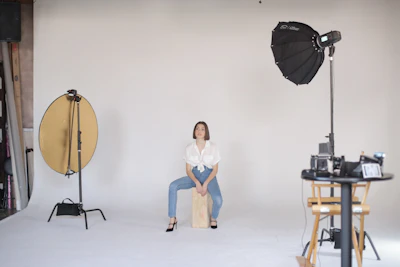
The photo belongs to it: many submission forms ask for it right away, the organizer needs it after acceptance at the latest, and where it is available it is looked at first. Psychological experiments show that people judge the trustworthiness and competence of a face after a tenth of a second, and that this judgment largely matches the one they reach with unlimited viewing time. It must look current and professional, because the organizer will search for you online anyway and see what you look like today.
If you want to know what your bio should look like for your target conferences, talk to us in an initial consultation.

Marin Niehues is a management consultant and international speaker. With Niehues Consulting he works with organisations from scale-ups to DAX 40 corporations, and on stage he has spoken at more than 45 conferences in 23 countries.
All articles by Marin Niehues