


Submit yourself or hire a speaker agency? Effort, time and results at professional conferences compared
Submitting yourself is enough for one or two appearances a year, while a speaker agency pays off once the stage is meant to bring in clients regularly with four to six appearances. This applies most strongly when time is short, contract values are high and you want to speak in front of a professional audience that includes your own clients. On the way to an appearance at a professional conference, an expert goes through several work steps from choosing a topic to following up, which stretch over months alongside day-to-day business. This article calculates the effort, shows the threshold from which an agency pays off and explains how the two routes can be combined.
Submitting yourself is enough for one or two appearances a year, while a speaker agency pays off once the stage is meant to bring in clients regularly with four to six appearances. This applies most strongly when time is short, contract values are high and you want to speak in front of a professional audience that includes your own clients. On the way to an appearance at a professional conference, an expert goes through several work steps from choosing a topic to following up, which stretch over months alongside day-to-day business. This article calculates the effort, shows the threshold from which an agency pays off and explains how the two routes can be combined.
What does doing it yourself at a professional conference mean?
Doing it yourself means running the entire submission operation, from research to the last response from an organizer, on your own and alongside all your client projects. A professional conference is an industry event where professionals spend one or more days hearing talks and making contacts, and its audience brings problems from their working lives. For consultants and freelancers it is the place where decision-makers see future vendors at work before any sales conversation takes place.
Organizers usually allocate speaking slots through a call for papers, CfP for short: a public call with which a conference collects proposals for its program. To apply, you submit an abstract, a short description of the planned talk including its benefit for the audience. A program committee of organizers and external experts reviews the submissions and makes a selection. Some conferences advertise nothing and fill the program through direct invitations, and then the route leads through an email to the people responsible for the program.
The work behind a submission
It starts with a talk topic that works at a conference. A topic that convinces in a client conversation does not necessarily appeal to a program committee, because the committee asks about the benefit for its audience rather than about your services. Title and abstract are developed from the topic and have to fit the focus of each conference.
Research follows. There is no central list of all suitable professional conferences, so you look for events where your clients sit and check for each one when its CfP is open. A CfP is usually open for three to twelve weeks, and if you miss the window, you wait for the next edition, which for annual conferences is a whole year away. How the calendar of a submission is structured is shown in the article Call for papers: the timeline.
Then you submit. Each conference asks for different fields, from title and abstract through bio and photo to track, format, level and preferred duration. Some use a platform on which you create a profile once and then submit with a few clicks, others require their own form on the conference website. With open calls the rejection usually arrives by itself, often weeks after the acceptances, and the published program shows the result at the latest. With the email route silence is common, and a follow-up email after two weeks is part of the job.
Finally you process rejections, which are the norm. The program committee compares each submission with all others in the same track, so a rejection usually says something about the competition in that window and little about your expertise.
How much time does it take to submit yourself?
Submitting yourself for four to six appearances a year takes several full working days per quarter, and most of that falls outside the forms. The required volume follows from the acceptance rate. In our submissions for clients we reach up to 19 percent acceptances per conference, while 5 percent at most is typical in the market at this volume of submissions. Per abstract our acceptance is around 7 percent, and if you want four to six appearances a year through open calls, you need about 60 to 90 submissions on that basis. How this calculation shifts at other rates is shown in the article How many submissions does an acceptance take?.
On submission platforms, fifteen to twenty submissions a day are realistic with a fixed set of prepared sessions, while you manage four to six a day for submissions tailored closely to a single conference. The form work for 60 to 90 submissions therefore fills three to six full working days. On top come the talk itself, abstracts in several versions, the conference list with a deadline calendar and the follow-up, and this work is spread across the whole year. How much time remains with you when working with an agency is worked out in the article How much time does a conference program with a speaker agency cost you?.
In industry, the Mittelstand, traditional consulting and the world of associations, the email route is the usual strategy, with standard letters and a personal opening, ten to fifteen a week once the conference list is in place. This requires research for each organizer: you have to find the organization behind the conference, identify the person responsible for the program and catch the moment when something is still open. Because many conferences close their program two to six months before the date, an email that arrives only a month beforehand usually runs into a finished program.
From how many appearances a year does an agency pay off?
An agency pays off from about three appearances a year, and at four to six the effort clearly speaks for it. If you have a single conference a year in mind, you know the organizer, know when the CfP opens and write an abstract in a few hours. The same applies if your network invites you, because if organizers ask you personally, you mainly need a good abstract and a clean bio. In the first year, one to three appearances is a realistic rule of thumb.
As a rule of thumb, four to six appearances a year cover the share of acquisition that the stage takes on, and from that volume an operation with deadlines throughout the year emerges. If you are a fully booked consultant, you push this work from week to week while the deadlines keep running. The calculation against it is short: working together costs from $999 net per month, and with consulting mandates in the five-figure range a single contract from a talk exceeds a year of fees.
The advantage is particularly clear if your industry has no open CfP landscape and every organizer has to be contacted individually, because the email route requires the most manual work per submission. How a speaker agency for experts differs from a speaker bureau that places paid speakers is answered in the article Speaker agency or speaker bureau.
Stage Starter takes on this work for you: we find the right calls, write the submission and submit it, follow up and accompany you all the way to the stage. What Stage Starter and agencies like it do as a whole and how the collaboration works is shown in the guide to speaker agencies.
Can you do both?
You can do both, and for many experts the mixed form is the most effective route. The agency takes on the volume, and you can write two to three closely tailored submissions per quarter for conferences that would move your pipeline a lot yourself or develop them together with the agency. You accept invitations from your network yourself anyway. The only important thing is that both sides know where submissions have already gone, so that no conference receives two proposals from the same person without coordination.
What stays with you
An agency makes sure that your talk is well prepared and reaches the right conferences in time. The expertise comes from you, and because the agency writes from your material, you approve the texts once before the submissions begin. You give the appearance yourself, from the talk to the conversation in the foyer afterwards, where acquisition takes place.
Frequently asked questions
Is a speaker agency worth it for consultants and freelancers?
A speaker agency is worth it for consultants and freelancers if the stage is to take on a fixed share of client acquisition and their own time is short. It pays off most with high contract values and clients who attend professional conferences. A single contract won then exceeds a year of fees.
From how many appearances a year does an agency pay off?
An agency pays off from about three appearances a year, and at four to six the effort clearly speaks for it. One or two appearances can be organized yourself with a few days of work. Beyond that, an operation with deadlines throughout the year emerges, which gets left behind alongside full client projects.
Can I submit myself and still use an agency?
You can submit yourself and still use an agency if you coordinate where submissions have already gone. A proven split is for the agency to take on the volume while you handle individual, closely tailored submissions and invitations from your network yourself. That way no conference receives duplicate proposals.
What does a speaker agency cost?
At Stage Starter, working together starts at $999 net per month for the whole operation. The Speaker Audit with a written roadmap costs from $549 net and is credited if you then hire the agency. Pay to speak, by comparison, quickly costs €10,000 and more for a single speaking slot.
How many submissions do I need for one acceptance?
At around 7 percent acceptance per abstract, there is one acceptance for about fourteen submissions. Per conference we reach up to 19 percent acceptances, while 5 percent at most is typical in the market at this volume. For four to six appearances a year that means about 60 to 90 submissions.
How long does it take from submission to appearance?
From submission to appearance usually takes two to six months. In our analysis of 2,415 conferences, the median time between deadline and conference start is 50 days, and for traditional professional conferences without an open call the inquiry comes four to eight months before the date. If you miss a conference's call, you wait for the next edition.
What is the difference between a speaker agency and speaker coaching?
A speaker agency gets you onto the stage, while speaker coaching prepares you for the appearance. Coaching trains your delivery and talk structure, packages are usually in the four- to low five-figure range, and you still write the submissions yourself afterwards. The agency takes on research, abstracts, submission and follow-up.
Can a speaker agency guarantee acceptances?
No agency can guarantee an acceptance, because the program committee decides. What it can commit to is the volume, quality and timing of the submissions. Per conference we reach up to 19 percent acceptances, while 5 percent at most is typical in the market.
Volume and time decide
The number of your chances on stage depends on the volume of submissions and on the time you have for them. Which route suits your topic and your calendar is something we clarify in an initial consultation.

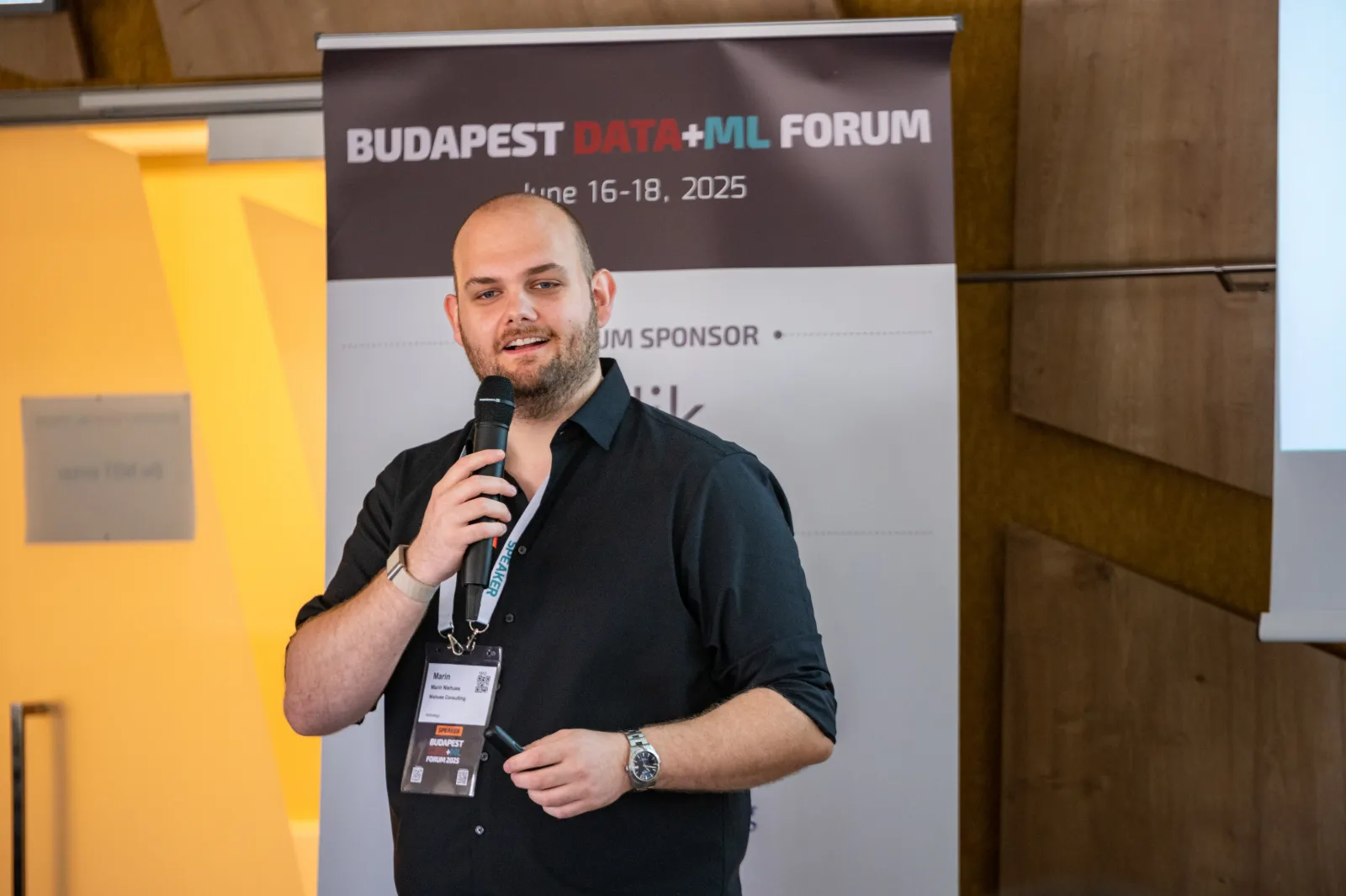
Marin Niehues is a management consultant and international speaker. With Niehues Consulting he works with organisations from scale-ups to DAX 40 corporations, and on stage he has spoken at more than 45 conferences in 23 countries.
All articles by Marin Niehues